






GET HELP
If you’re struggling with poverty, homelessness, debt, domestic abuse, mental health challenges, or any other complex needs, we’re here to help.
SUPPORTED HOUSING
CARE provides safe, stable homes for individuals and families who need a high level of housing support. Properties in North East Lincolnshire are leased from private landlords and offered without deposits, guarantors, or advance rent. Our Housing Team visit regularly to check the property, help tenants manage bills and benefits, address tenancy issues quickly, and make sure repairs are reported and completed. Tenants are supported to maintain their home and develop the skills needed for independent living. When their tenancy with CARE ends, we work with them to move into suitable long-term housing.
CRISIS INTERVENTION AND PRACTICAL SUPPORT
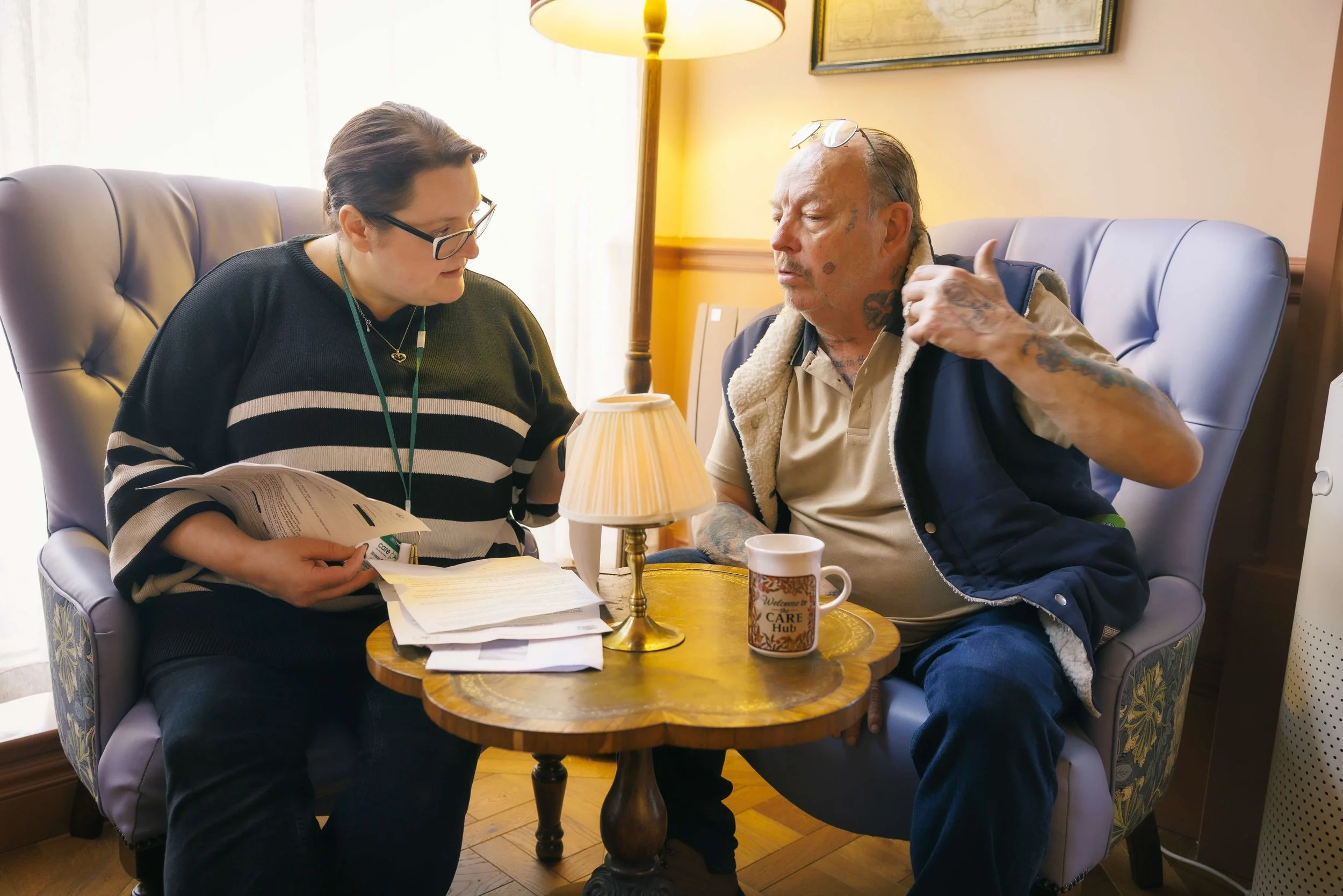
Our Crisis Support Team is here for people facing difficult situations, whether that is money worries, housing problems, health concerns or something else where practical help is needed. We listen, talk with you and recommend the best options to support you. Sometimes we’re able to resolve your problems quickly, or you may need an ongoing set of calls or appointments until your situation has improved.
Our team is based at The CARE Hub in Grimsby, where you can either drop in for a friendly chat or book an appointment. Everyone is welcome.
“Every time you come to see me, it’s like there’s this wall in front of me and every visit you are taking a brick out of the wall and I can see a way forward and the light shining through.”
HOW TO GET HELP FROM OUR CRISIS SUPPORT AND HOUSING TEAM
Frequently Asked Questions
CRISIS INTERVENTION AND PRACTICAL SUPPORT
-
CARE’s Crisis Support Team are trained professionals who provide practical support to people experiencing financial hardship, housing issues, or crisis situations. They work with you to understand your circumstances and help you access the right support as quickly as possible. This may include help with benefits, housing applications, food parcels, utility top-ups, and referrals or signposting to other services. We offer advice, guidance, and advocacy where appropriate, while always encouraging you to make informed decisions and stay in control of your choices.
-
We provide practical help to people who are struggling financially or are at risk of homelessness. We offer help with:
- Finance and debt management
- Budgeting support and payment plans
- Support with forms and letters (housing, medical, tribunal, council, etc.)
- Digital support (online claims, emails, uploading evidence)
- Benefit checks, help with sanctions and benefit appeals
- Universal Credit claims
- Disability and PIP claims
- Advocacy and speaking to agencies on your behalf
- Food parcels, clothing and furniture donations
- Utility top-ups (gas and electricity)
- Bus passes
- Mental health
- Other health issues
- Support around isolation and wellbeing
- Domestic Abuse
- Signposting and referrals to specialist services
- Help accessing GP and health services
- Applications for our Supported Housing
- Home Choice Lincs applications
- Referrals to the Homelessness Team
- And more.
-
Our service is open to anyone. There are no restrictions, and you do not need a referral to contact us.
-
You can contact us by phone on 01472 232310 (option 1) or by completing an enquiry form on our website. If you are contacting us about food or utilities, please make this clear so we can respond quickly.
-
We aim to respond to all enquiries within 24 hours, Monday to Friday. Food parcel and utility-related requests are treated as a priority.
-
Yes. We can offer face-to-face appointments, including appointments outside of our normal opening hours. You can book these appointments in advance by calling 01472 232310 (option 1) or by dropping in during the week to arrange an appointment.
-
Yes. We can help with:
- Universal Credit claims
- PIP applications
- Benefit checks to make sure you’re receiving everything you’re entitled to
-
No. You do not need to be claiming benefits to use our service. We support anyone who needs help. Whatever your situation, and without judgement.
-
If we are unable to support you directly, we will always signpost you to another service that we believe can help you.
-
Yes. With your consent, a support worker, family member, or friend can contact us on your behalf.
-
This depends on the support you need, but it can be helpful to have:
- Basic personal details
- Information about your income or benefits
- Details of any housing issues
- Utility account information (if asking for top-ups)
Don’t worry if you don’t have everything, we can still help.
-
When you meet one of our Crisis Support Team, you can expect a friendly, supportive, and non-judgemental approach. Our workers will take time to listen to you, understand your situation, and talk through what support may be available to you. You won’t be rushed, and you don’t need to know exactly what help you need before the appointment. Our Crisis Support Team will listen, offer practical advice, and help you take the next steps at a pace that feels right for you.
-
No. Our service is free.
SUPPORTED HOUSING
-
Yes. We can:
- Support you with housing applications
- Help you apply to Home Choice Lincs
- Refer you to the Homelessness Team where appropriate
- Provide advice and signposting to emergency or longer-term support
-
Yes. Our Crisis Support Team can help you complete housing application forms, including applications for supported housing and Home Choice Lincs. We can also help you gather the information you need and check that your application is completed correctly.
-
Personal identification and any previous landlord references and character references.
-
Yes. If you’ve received a notice from your landlord, such as a notice seeking possession or eviction notice, we can offer guidance and signpost you to appropriate housing or legal advice services.
-
Yes. We can help you understand how Home Choice Lincs works, support you with bidding, and answer questions about your application.
-
Once your application has been submitted, we can explain the next steps, what decisions may be made, and what you can do while you are waiting for an outcome.
-
Yes. We work closely with local authorities, housing providers, and other support services to help ensure you receive the right support.
-
Supported housing provides accommodation with weekly support from a Support Worker. This support can help with things like mental health, physical health conditions, budgeting, previous domestic abuse, tenancy issues, or any other needs.
-
Supported housing is for people who need extra help to maintain a tenancy. This may include people experiencing mental health difficulties, physical health issues, learning difficulties, previous domestic abuse, homelessness or risk of homelessness, or other support needs.
-
Supported housing includes regular Support Worker visits and personalised support to help you maintain your tenancy. General needs housing does not include this support. Supported housing is often a stepping stone to more independent living.
-
No. Anyone can apply directly. If you’re already working with a support agency, they can help you complete the form, but it is not required.
-
It helps to have:
- Basic personal details
- National Insurance number
- Current and previous addresses
- Information about your support needs
- Details of health conditions, mental health, or circumstances such as domestic abuse
- Information about any agencies already supporting you (GP, mental health workers, social worker, etc.)
Don’t worry if you don’t have everything - we can still help you complete the form
-
Be as clear and honest as possible. You can include anything that makes it difficult for you to manage a tenancy without support, such as:
- Mental health conditions
- Physical health or mobility issues
- Learning difficulties
- Previous domestic abuse
- Substance misuse
- Difficult life events
- Risk of homelessness or previous tenancy breakdown
Your answers help us understand what type of support you may need.
-
Most people complete it within 15-30 minutes. If you need help, we can go through it with you at your pace.
-
Once you submit your application:
- We will review your support needs.
- A Support Worker may contact you for more information.
- We assess whether supported housing is suitable.
- If accepted, you will be added to our waiting list or matched to an available property.
We’ll explain the next steps clearly, so you know what to expect. -
You can still complete the form. We will assess your situation and let you know if supported housing is appropriate, or if another type of accommodation or support may be more suitable.
-
Don’t worry. If any information is missing, incomplete, or needs more detail, we will contact you to go through it.
-
Yes. Supported housing is designed for people who need extra help to maintain a tenancy, so engaging with support is an important part of your tenancy agreement.
Engaging with support means things like:
- Attending your weekly Support Worker visits
- Letting us know if you need extra help
- Working with your Support Worker on goals such as budgeting, health, daily living skills, or sustaining your tenancy.
-
We will always try to offer you a property that meets your needs, but availability is limited. You may not always be able to choose a specific property or location. If you reject an offer, we will discuss your reasons and decide the next steps with you.
-
Supported housing tenancies are up to two years. During this time, you will receive weekly support to help you build the skills and confidence needed for more independent living. If you are engaging well with support and making progress, we will work with you throughout the tenancy to prepare for your move-on options. Your Support Worker will also help you plan your next steps before the two-year period ends.